Gang belonging versus individual freedom
West Side StoryGang belonging versus individual freedom is the conflict between the solidarity and status the Jets promise and the violence that their collective identity demands. The narrative makes Tony Wyzek’s departure from the gang a genuine attempt to change, not a clean escape: even after he rejects gang life, loyalty to Riff Lorton and responsibility toward his old neighborhood draw him back into its crisis.
Belonging as a collective identity
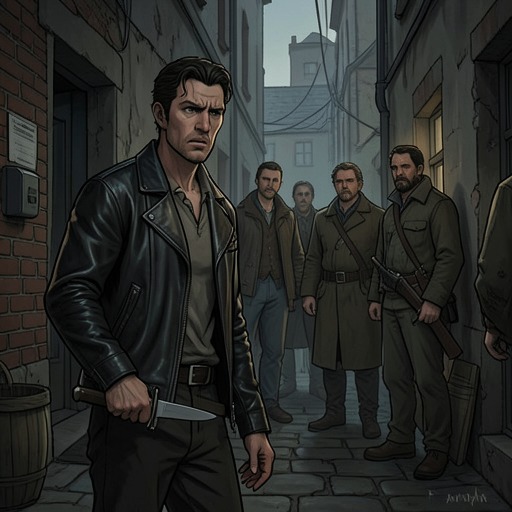
The Jets make belonging visible in coordinated gestures and movement. Riff sets off with his thumbs hooked into his military belt buckle and an exaggeratedly stiff stride; Baby-John imitates him, and other Jets adopt the same posture. It is a signal that the group is going hunting, prepared to attack anyone, anywhere, for almost any reason. The performance gives its members a shared identity, but also announces that individual judgment has yielded to the gang’s appetite for violence.
That appetite is not confined to a carefully chosen rival. The Jets hate whatever and whoever obstructs them, and their targets can be people they were friendly with the day before, acquaintances they had just joked with, a shopkeeper who extended them credit, or even a derelict building with an unbroken window. The city, with its many streets, rooftops, basements, and passageways, becomes a battlefield; residents who do not approve of the Jets avert their eyes because trouble is already plentiful. Belonging offers the gang a common purpose, but the purpose is destructive and indiscriminate.
The arrival of Puerto Ricans supplies that aggression with a more specific target. The gangs’ hostility toward them makes the city safer for others only in the bitter, temporary sense that violence has been redirected toward a group treated as responsible for its own victimization. The thought that might follow if the Puerto Ricans fled or were driven out is deliberately left unresolved: the gangs might turn on one another again. The episode exposes how collective identity can depend on an enemy, and how apparent social order rests on exclusion rather than peace.
Tony Wyzek’s departure
Tony Wyzek’s break with the Jets begins as private dissatisfaction. Alone on a subway train, he feels a persistent sense of inferiority that even his position as the gang’s leader cannot dispel. He recognizes his ignorance and doubts that the gang’s boasts about being the greatest can make him wiser. After traveling across Brooklyn, the Bronx, Queens, and Manhattan, he returns to his neighborhood and sits on a rooftop until dawn. The journey ends not in a new public triumph but in the decision to stop being a Jet.
The next morning, Tony Wyzek looks for work, and Doc gives him a job at the drugstore. Four months later, he is still working there. He is unsure whether Doc hired him because he was an inexpensive employee, but the job matters to his effort to do something that will make his mother happy. His shame at having neglected that responsibility is itself new. Leaving is therefore more than changing affiliations: it involves work, a different obligation, and an unfamiliar readiness to question his former life.
Yet his separation is uneasy rather than celebratory. Tony Wyzek does not tell the Jets—or anyone else—how confused he feels; instead, he pushes away Riff Lorton, Ice, and Action, who have taken over the gang. The easiest way to preserve his new direction is to avoid explaining it. That silence marks both his independence and its limits: he has made a choice, but has not yet found a way to reconcile it with the people who defined his former life.
Friendship pulls him back
When Riff Lorton finds him, Tony Wyzek admits that seeing Riff pleases him, but that being a Jet no longer does. Riff answers with the gang’s own account of belonging: without a gang, a person is an orphan; in their neighborhood, the gang matters more than parents, and membership places someone at the top. His argument makes solidarity sound indispensable, but it also reveals the pressure hidden in that promise. If belonging is what makes someone count, leaving risks becoming equivalent to having nowhere and no one.
Tony Wyzek cannot dismiss Riff Lorton’s appeal as empty rhetoric. Their years of supporting one another crowd into his memory, and he knows Riff still regards him as his best friend. Tony resists returning to the gang, saying he has had enough, but Riff has already told the others he will appear at the dance and asks for his help against the Sharks. Tony first reacts with anger at being committed without consent; then he recognizes why Riff did it. In Riff’s eyes, the request comes from a friend, not simply from a former leader recruiting a Jet.
That distinction brings Tony Wyzek back into the conflict without reversing his decision to leave. He does not want to fight the Sharks, but sees Riff’s appeal as an obligation to his friend, the Jets, and the neighborhood. He had wanted Riff to take the lead when he left; now he feels responsible for helping Riff keep it. Personal freedom is thus tested not only by direct gang pressure but by bonds of friendship and responsibility that survive the identity a person has rejected.
Trying to live beyond the feud
At the confrontation, Tony Wyzek seeks out the Jets instead of hiding from them, although his former companions cannot understand why. His reasons include Maria Nunez and Bernardo: he wants Bernardo to recognize his right to see Maria and to understand that he left the Jets because he no longer wanted to fight the Sharks. He wants to demonstrate that he has grown into someone who understands love. His changed purpose does not erase the old conflict; it places a personal relationship in direct opposition to the gang’s expectations.
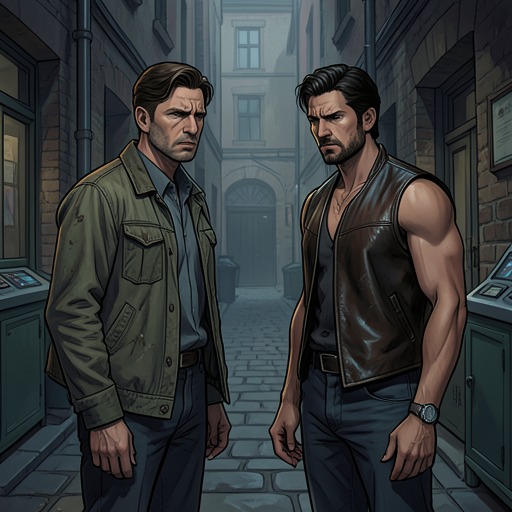
Tony challenges the Jets and Sharks for relying on weapons, asking why they cannot fight with their bodies instead. The challenge expresses his desire to constrain the violence, but it does not dissolve the antagonism between the groups. Bernardo rejects the apparent custom of shaking hands, dismissing it as one of the false manners he associates with the country; he says the groups hate one another and that his side hates the Jets twice as much. The refusal makes the feud’s group boundaries explicit: gestures that might suggest mutual recognition cannot overcome a shared identity organized around hatred.
Maria Nunez later gives Tony Wyzek’s attempted change its clearest moral measure. She says he had been like Riff Lorton and Bernardo, but had wanted to change, unlike either of them. At the same time, she reminds him that he killed Bernardo and that she sent him to the encounter by making him promise to go. Her judgment holds transformation and consequence together: Tony’s wish to live differently matters, but it does not cancel the violence or the loyalties that carried him into it.
The cost of belonging
The conflict is not presented as a simple choice between a bad gang and an uncomplicated private freedom. For Riff Lorton, the Jets provide support and standing in a neighborhood where being unaffiliated can feel like being an orphan. For Tony Wyzek, however, their collective life has become intolerable, and he begins to build a different one through work and concern for his mother. The same friendships that make leaving painful also give his return its emotional force.
The gangs’ hostility toward the Puerto Ricans shows the wider cost of making belonging depend on an opposing group. Redirected aggression can look like order to those temporarily spared, but it leaves the city’s violence intact and gives the conflict a ready-made target. Against that collective logic, Tony’s decision to change is meaningful precisely because it is incomplete: he seeks love and a life beyond fighting, yet his remaining ties draw him back toward the struggle. The tension between membership and freedom therefore persists as both an intimate dilemma and a cycle sustained by the neighborhood around him.